
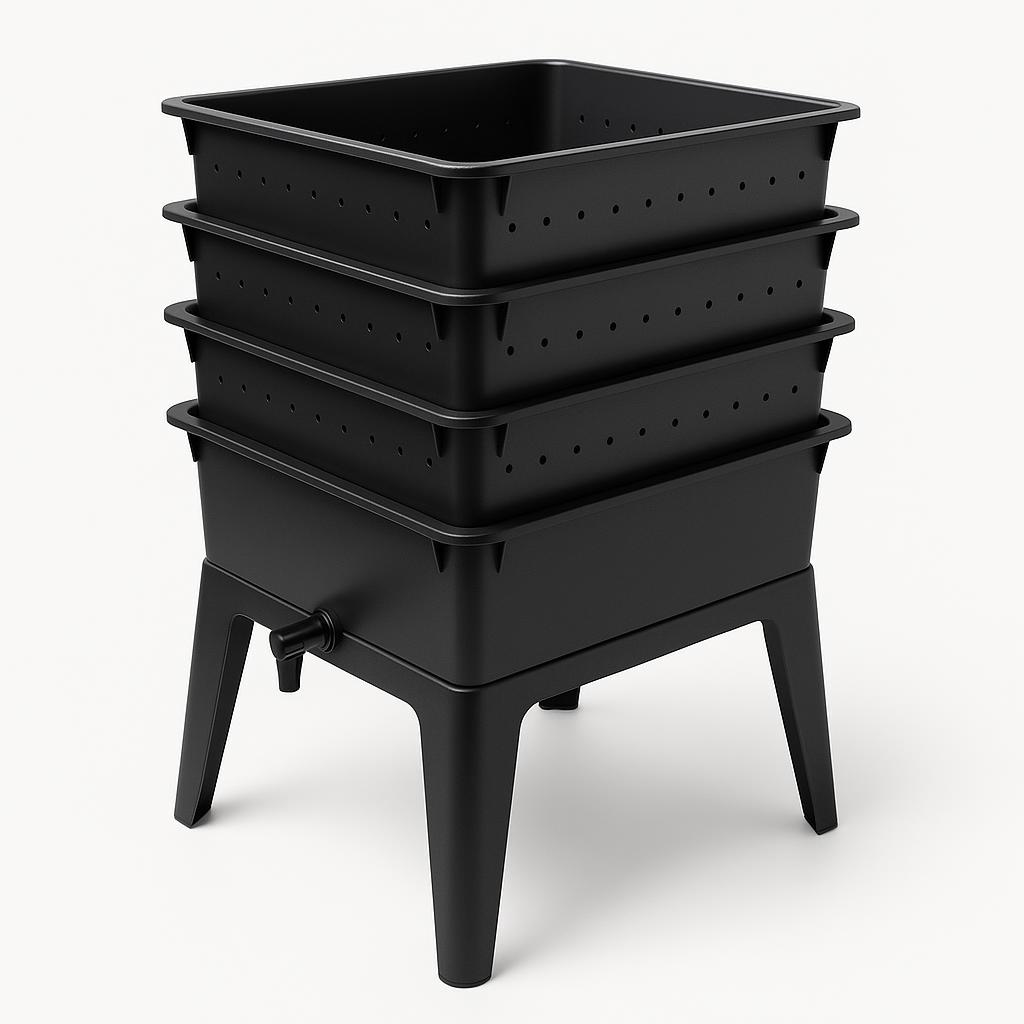
Help! My Worm Bin Smells Bad: Complete Odor Troubleshooting Guide
TL;DR: Bad smells mean anaerobic conditions (lack of oxygen). Fix immediately by: stopping feeding, adding dry bedding, mixing thoroughly, improving drainage, and increasing ventilation. Most odor problems resolve in 24-48 hours with proper intervention.
What a Healthy Bin Should Smell Like
First, let's establish the baseline. A properly functioning worm bin should smell:
- Earthy - like a forest floor after rain
- Pleasant - you shouldn't mind getting close
- Slightly sweet - from decomposing organic matter
- Mild - not strong or overpowering
If your bin smells bad, something is wrong - but it's almost always fixable!
Types of Bad Smells and What They Mean
Ammonia Smell (Sharp, Pungent)
Cause: Too much nitrogen-rich food (proteins)
Common Sources:
- Meat or dairy products
- Too many coffee grounds
- Excessive amounts of fresh grass clippings
- Pet waste (never add this!)
Fix:
- Stop adding nitrogen-rich foods immediately
- Add carbon-rich bedding (shredded paper, cardboard)
- Mix bin thoroughly
- Add crushed eggshells to balance pH
- Increase ventilation
Rotten Egg Smell (Sulfur)
Cause: Anaerobic conditions (no oxygen)
Common Causes:
- Overfeeding
- Poor drainage (too wet)
- Compacted bedding
- Insufficient ventilation
Fix:
- URGENT: Stop feeding immediately
- Add large amounts of dry bedding
- Fluff and mix entire bin thoroughly
- Improve drainage (add holes if needed)
- Don't feed again until smell is gone
Sour/Vinegar Smell
Cause: Fermentation from overfeeding
Common Causes:
- Too much food added at once
- Food not buried properly
- Acidic foods (citrus, tomatoes)
Fix:
- Stop feeding for 1-2 weeks
- Remove any visible uneaten food
- Add dry bedding and mix
- Add crushed eggshells to neutralize acid
- Resume feeding at half previous amount
Moldy/Musty Smell
Cause: Excessive moisture
Common Causes:
- Poor drainage
- Too much wet food
- Insufficient dry bedding
- High humidity
Fix:
- Add lots of dry bedding (newspaper, cardboard)
- Improve drainage
- Increase ventilation
- Reduce moisture-rich foods temporarily
- Mix bin to expose wet areas to air
The 5-Step Emergency Odor Fix
If your bin smells terrible, follow these steps in order:
Step 1: Stop Feeding (Immediately)
- Don't add ANY new food
- Remove any visible uneaten food
- Wait until smell is completely gone before resuming
Step 2: Add Dry Bedding (Lots of It)
- Add 2-3 inches of dry material:
- Shredded newspaper
- Torn cardboard
- Dry leaves
- Coconut coir
- This absorbs excess moisture and adds carbon
Step 3: Mix Thoroughly
- Use a hand trowel or garden fork
- Mix from bottom to top
- Break up any compacted areas
- Expose anaerobic pockets to air
- This is the MOST IMPORTANT step!
Step 4: Improve Drainage and Ventilation
- Add more drainage holes if needed
- Prop lid open slightly (if no pest issues)
- Elevate bin on blocks for air circulation underneath
- Consider adding a layer of gravel at bottom
Step 5: Add pH Neutralizers
- Sprinkle crushed eggshells throughout
- Add a handful of garden lime (optional)
- These neutralize acids causing odors
Prevention: Never Deal with Odors Again
Feeding Best Practices
DO:
- Bury all food under bedding
- Feed small amounts frequently
- Chop food into small pieces
- Mix food types (don't add all of one thing)
- Wait until previous feeding is mostly gone
DON'T:
- Leave food on surface
- Add meat, dairy, or oils
- Overfeed (more food than worms can handle)
- Add large chunks of food
- Feed in same spot every time
Moisture Management
Perfect Moisture Level:
- Like a wrung-out sponge
- Bedding should clump when squeezed
- But no water should drip out
Too Wet Signs:
- Water pooling at bottom
- Bedding is soggy
- Worms trying to escape
- Musty smell
Too Dry Signs:
- Bedding is dusty or crumbly
- Worms are small and inactive
- Food isn't decomposing
Bedding Maintenance
- Add fresh bedding weekly
- Keep bedding layer 3-4 inches thick
- Use variety of materials
- Fluff bedding monthly
Ventilation
- Ensure adequate air holes
- Don't seal bin completely
- Position bin for air circulation
- Consider adding mesh screens
Advanced Odor Solutions
For Persistent Ammonia Problems
Create a Carbon Layer:
- Add 4-6 inches of shredded cardboard on top
- Don't disturb for 2 weeks
- Carbon absorbs excess nitrogen
- Resume feeding at reduced rate
For Severe Anaerobic Conditions
Bin Reset Method:
- Prepare new bin with fresh bedding
- Gently transfer worms (leave old bedding)
- Let old bin sit outside for 2 weeks to cure
- Harvest cured castings
- Start fresh with new bin
For Recurring Odor Issues
Check These Factors:
- Bin size (too small for worm population?)
- Location (too hot, causing rapid decomposition?)
- Food types (too much of problematic foods?)
- Drainage (adequate holes and elevation?)
- Worm health (are they active and healthy?)
What NOT to Do
Don't:
- Add perfumes or air fresheners (toxic to worms!)
- Ignore the problem (it will get worse)
- Keep feeding despite odors
- Add water to "dilute" the smell (makes it worse!)
- Give up! (Odors are fixable!)
Odor Troubleshooting Flowchart
Smell Type → Likely Cause → Quick Fix
Ammonia → Too much protein → Add carbon bedding
Rotten egg → No oxygen → Mix thoroughly + stop feeding
Sour → Overfeeding → Remove food + add dry bedding
Musty → Too wet → Add dry bedding + improve drainage
Success Stories
"My bin smelled so bad I almost gave up. I followed the 5-step fix - stopped feeding, added tons of newspaper, mixed everything, and added eggshells. Within 48 hours the smell was gone! Now I maintain it properly and have zero odor issues." - Jennifer M., Tampa
"The rotten egg smell was unbearable. Turns out I was overfeeding and the bottom was completely anaerobic. I mixed it thoroughly and added drainage holes. Problem solved in 2 days!" - Mike R., Orlando
Your Odor-Free Bin Checklist
✓ Feed small amounts, frequently
✓ Always bury food under bedding
✓ Maintain proper moisture (wrung-out sponge)
✓ Add fresh bedding weekly
✓ Mix/fluff bin monthly
✓ Ensure adequate ventilation
✓ Monitor drainage
✓ Keep carbon:nitrogen ratio balanced
✓ Check bin weekly for early warning signs
Remember: A smelly bin is a fixable bin! With proper care, your worm bin should be odor-free and pleasant. Don't give up - you've got this!
Found this helpful? Share it with fellow gardeners!